Shōgatsu: Japanese New Year
Society Culture- English
- 日本語
- 简体字
- 繁體字
- Français
- Español
- العربية
- Русский
Ushering in the New Year
The Shōgatsu season, particularly New Year’s Day, is regarded as Japan’s most important holiday, combining traditions and customs expressing gratitude for the past year and ensuring health and prosperity in the year ahead.
Until the adoption of the solar calendar in the nineteenth century, it was common to mark age by the system of kazoedoshi, in which everyone grew one year older at New Year. Preparing food and drink to welcome the visiting New Year deity is said to be the origin of many of the rituals surrounding the holiday.
As part of these preparations, households traditionally clean the home in December, prepare osechi ryōri (New Year cuisine), and decorate with seasonal ornaments, such as kadomatsu (gateway pines), shimekazari (decorative rope), and kagami mochi (round rice cakes).
The Shōgatsu season runs through January 7, or January 15 in some regions. While New Year’s Day, or Ganjitsu, is the only date recognized as a national holiday, government offices and many businesses close their doors from December 29 to January 3.
In recent years, convenience stores and some restaurants remain open even on New Year’s Day, and more supermarkets and department stores are reopening from January 2.
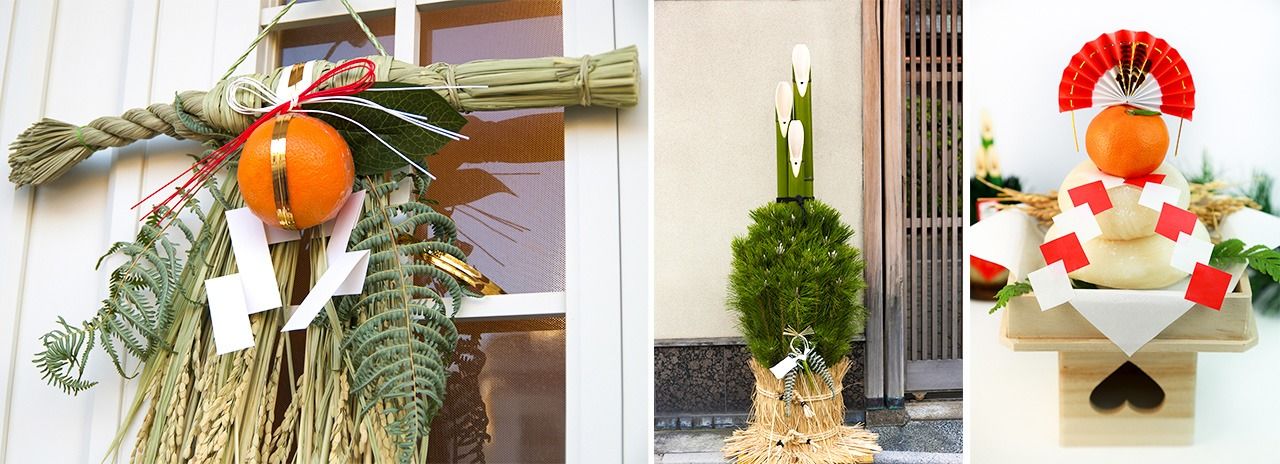
New Year decorations: (from left) shimekazari rope, kadomatsu pines, and kagami mochi rice cakes. (© Photolibrary)
Hatsumōde: New Year’s First Prayers
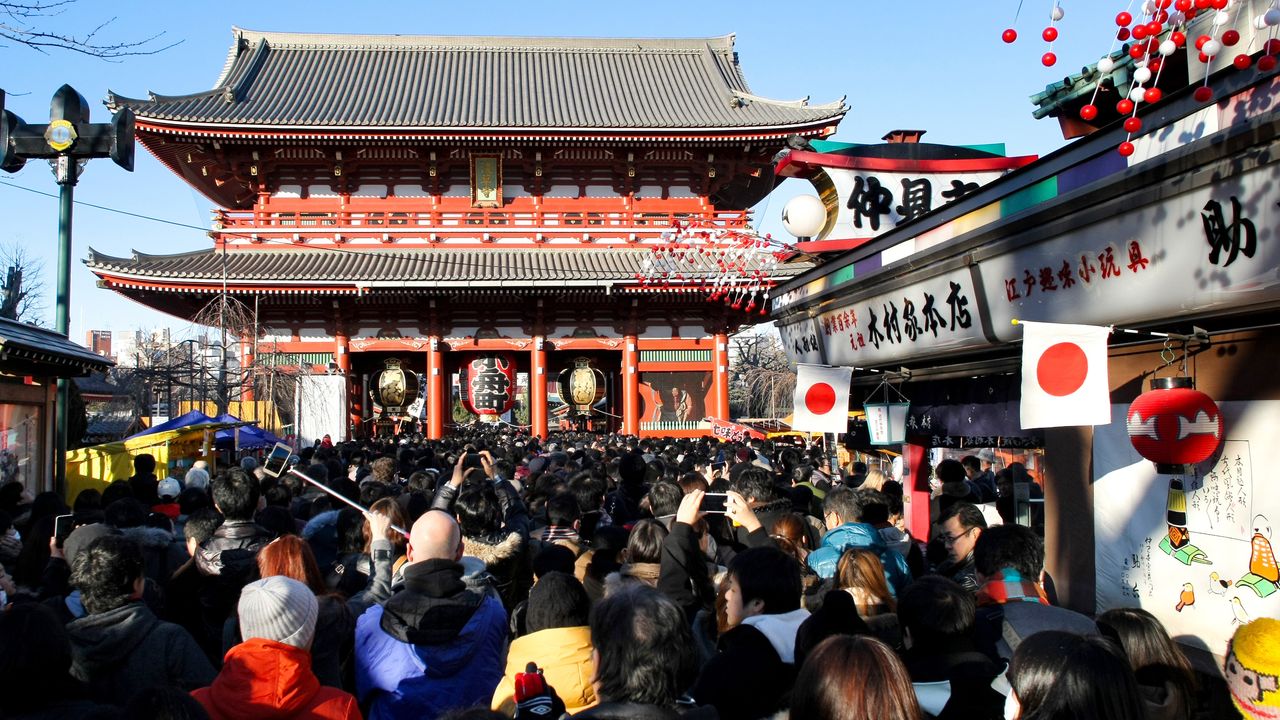
Paying homage at a shrine or temple to pray for good luck is one of the most important customs Japanese observe during the first three days of Shōgatsu. For hatsumōde, many travel to major places of worship, such as Meiji Shrine in Tokyo or Kawasaki Daishi in Kanagawa Prefecture. Praying typically involves first providing an offering, or saisen. Worshipers toss coins into saisen bako (offertory boxes). Some shrines and temples that expect big crowds may establish temporary collection spaces to accommodate the increased numbers of visitors. After offering a prayer, visitors move along to draw omikuji (paper fortunes), write wishes on ema (votive tablets), or purchase omamori (protective charms). The modern form of hatsumōde took shape only in the late nineteenth century, encouraged by government promotion of shrine rituals and made more accessible by the spread of railways. From the cities, it grew into a nationwide custom that continues today.
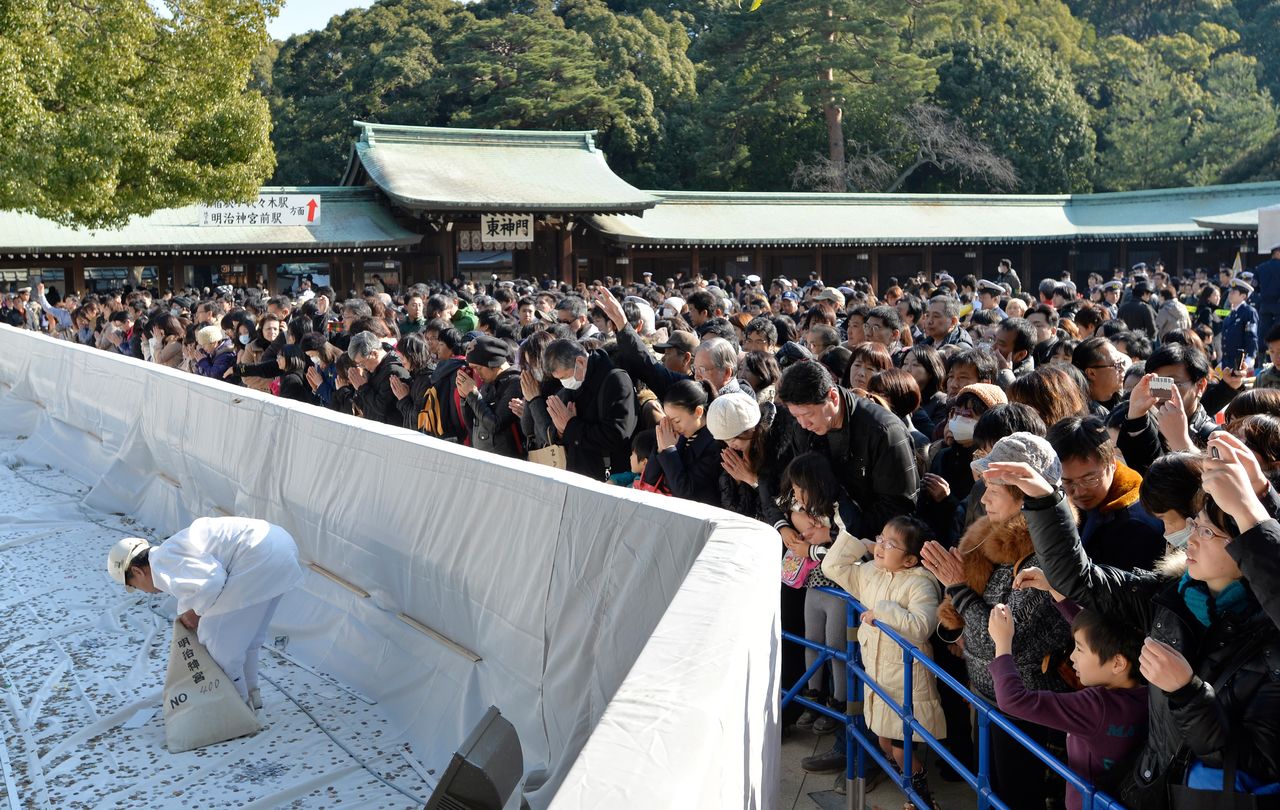
Visitors crowd around the main hall at the Meiji Shrine to offer up their first prayer of the New Year, while a staff member gathers money tossed into the collection area. (© Jiji)
Events on January 2
Crowds of people visit the Imperial Palace on January 2, when it is opened to the public, to hear the emperor address the gathered well-wishers.
Also on January 2, Japanese calligraphy aficionados dip their brushes to write the first characters of the year, a tradition known as kakizome. Practitioners of Japanese martial arts, such as kyūdō, kendō, and karate, ceremoniously observe the start of training, or hatsugeiko.
The dream seen on the night of January 2 into the morning of January 3 is called hatsuyume. Dreams featuring Mount Fuji, hawks, and eggplants are considered particularly propitious—giving insight into the tone of the year ahead.
Eager shoppers relish the bargains available at department stores, which are typically open for hatsuuri (first day of business) on the second day of the year—a custom that traces back to the fish market at Nihonbashi in the Edo period. Fukubukuro (fortune bags) filled with an array of different merchandise and sold for a set price have also become popular. Shoppers cannot check the content of the sealed packages, adding excitement to the purchase.
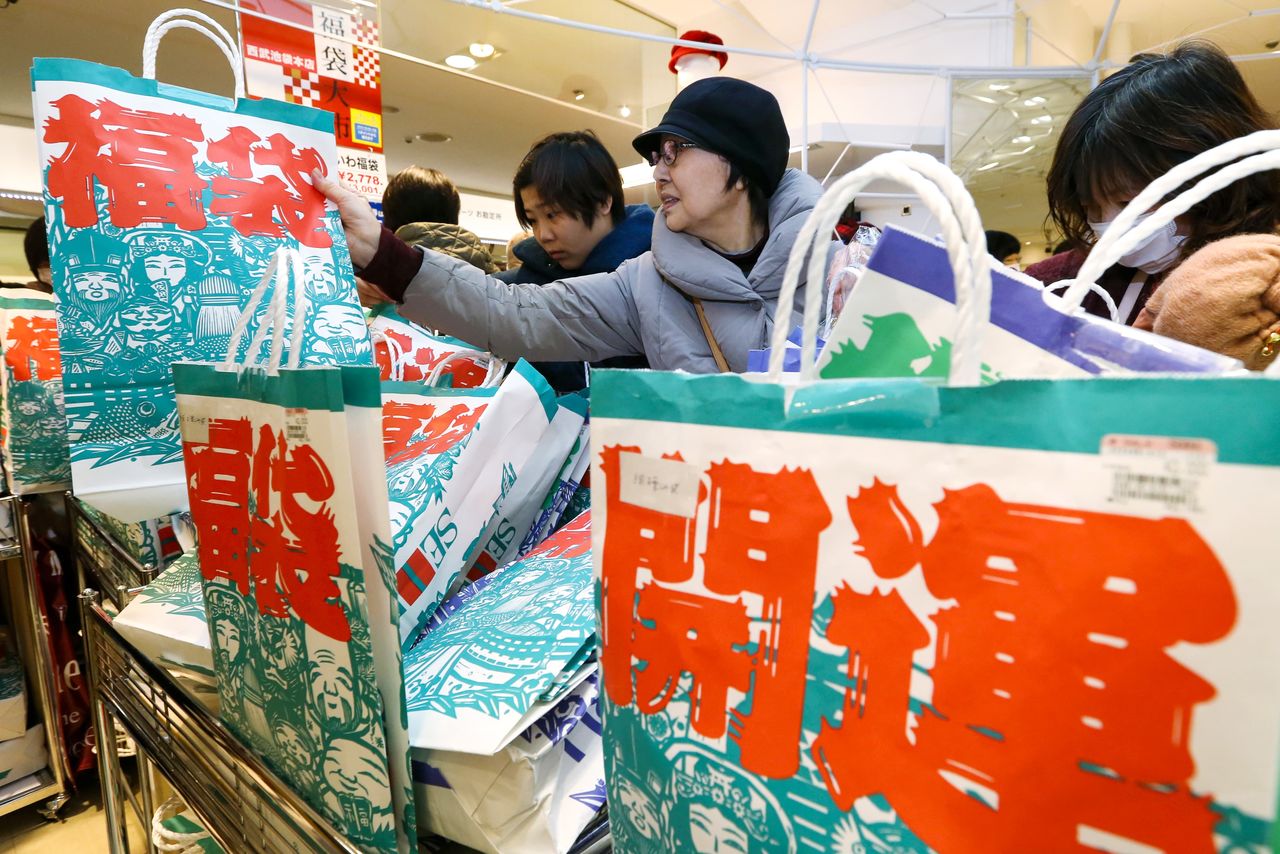
Shoppers grab fukubukuro at the Seibū Department Store in Ikebukuro. (© Jiji)
New Year Cuisine
New Year mealtimes center around traditional osechi ryōri, an array of dishes with auspicious associations of longevity, prosperity, and health.
The term osechi traces back to an imperial custom of preparing special dishes called sechinichi ryōri five times a year to mark seasonal festivals and offering them to the gods. Over time, the New Year festival came to be regarded as the most important, and osechi ryōri came to mean the dishes served specifically during New Year.
Customarily presented in layered lacquer boxes called jūbako, osechi cuisine—made from ingredients that keep well—is generally prepared in the period leading up to Ōmisoka and gradually consumed over the first three days of New Year. This practice not only honors the visiting New Year deity but also allows family members to take a break from kitchen duties. For this reason, the dishes are designed to taste good even when served cold. Creating a New Year spread requires considerable time and effort, so many households today purchase individual dishes at supermarkets. Some order entire sets featuring recipes by famous chefs from department stores or online vendors. While osechi ryōri traditionally features Japanese fare, dishes based on Western, Chinese, Korean, and other recipes have also become more common.
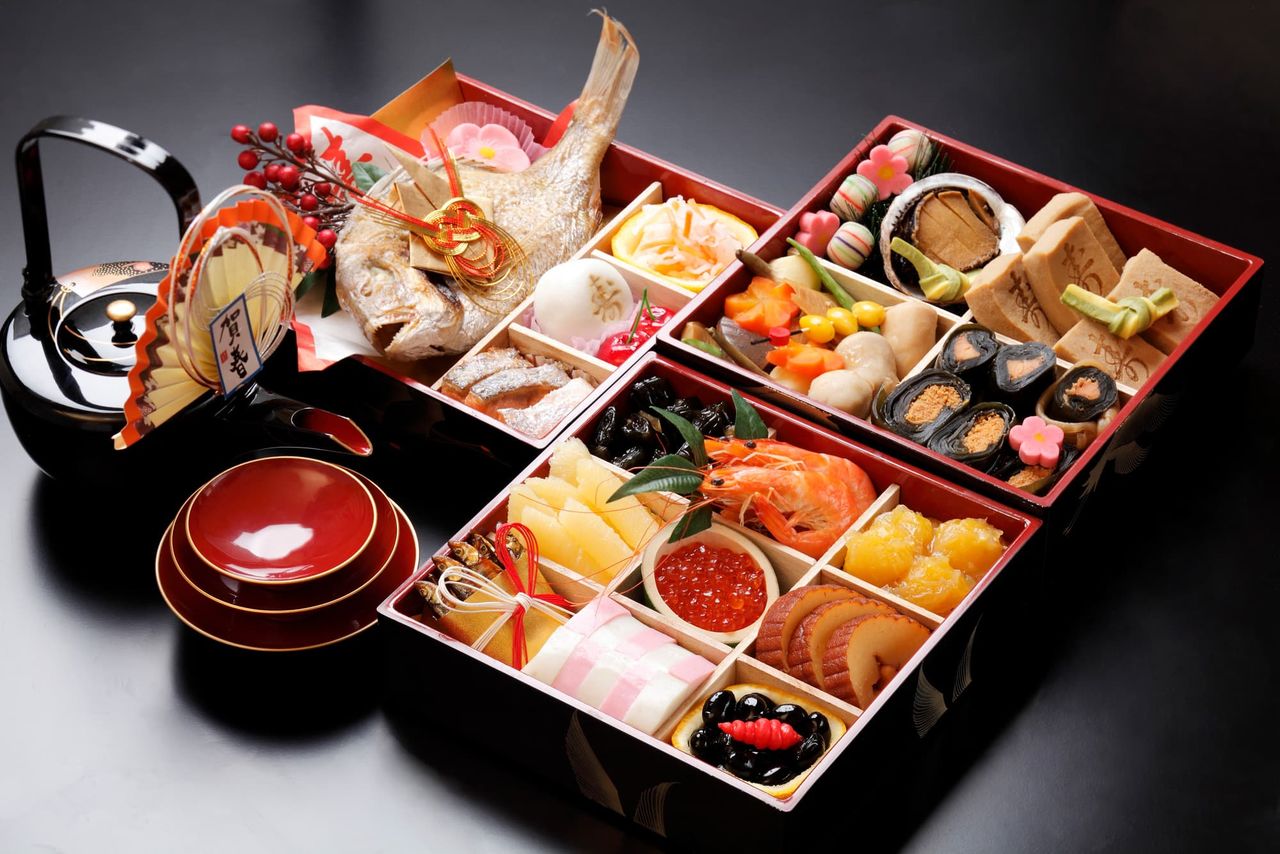
A layered jūbako filled with New Year cuisine and vessels for serving toso (spiced sake). (© Pixta)
No New Year table would be complete without zōni, a traditional soup featuring mochi (rice cake) and vegetables. Ingredients vary widely, with each region and household boasting a favored flavoring and preparation technique.
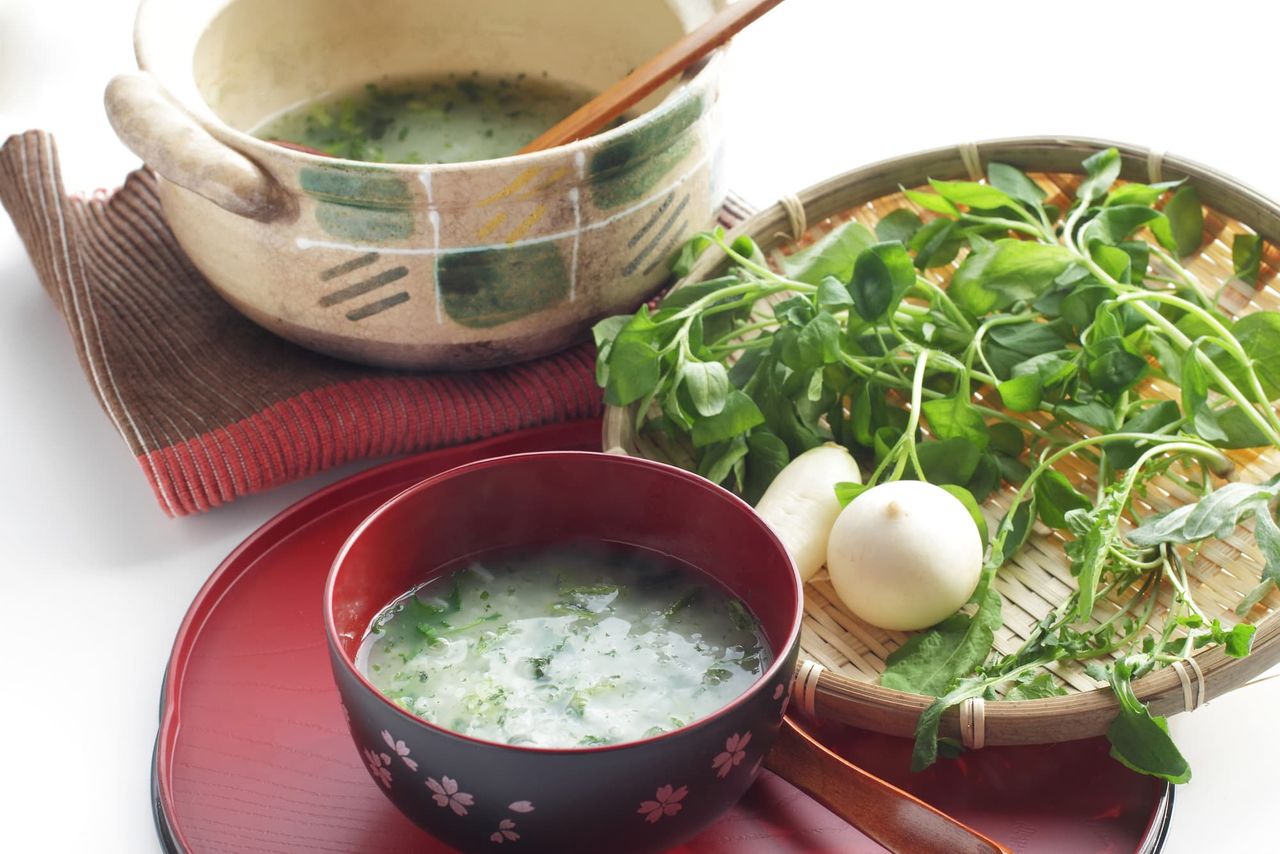
Seven herbs go into making nanakusa-gayu. (© Photolibrary)
On January 7, the final day of the New Year festive period for many, people traditionally eat nanakusa-gayu (seven-herb rice porridge). This simple dish is considered the perfect gastronomical antidote for the indulgent meals of the holiday season. The dish incorporates the seven medicinal herbs of spring: nazuna (shepherd’s purse), gogyō (cudweed), hotokenoza (nipplewort), seri (water dropwort), hakobera (chickweed), suzuna (turnip), and suzushiro (daikon radish). Eating this porridge is thought to nourish the body and ward off illness during the cold winter months. Packages of nanakusa are generally available at supermarkets up to January 7.
(Banner photo: Worshipers take part in hatsumōde at Sensōji in Tokyo’s Asakusa district. © Jiji.)